Record or import
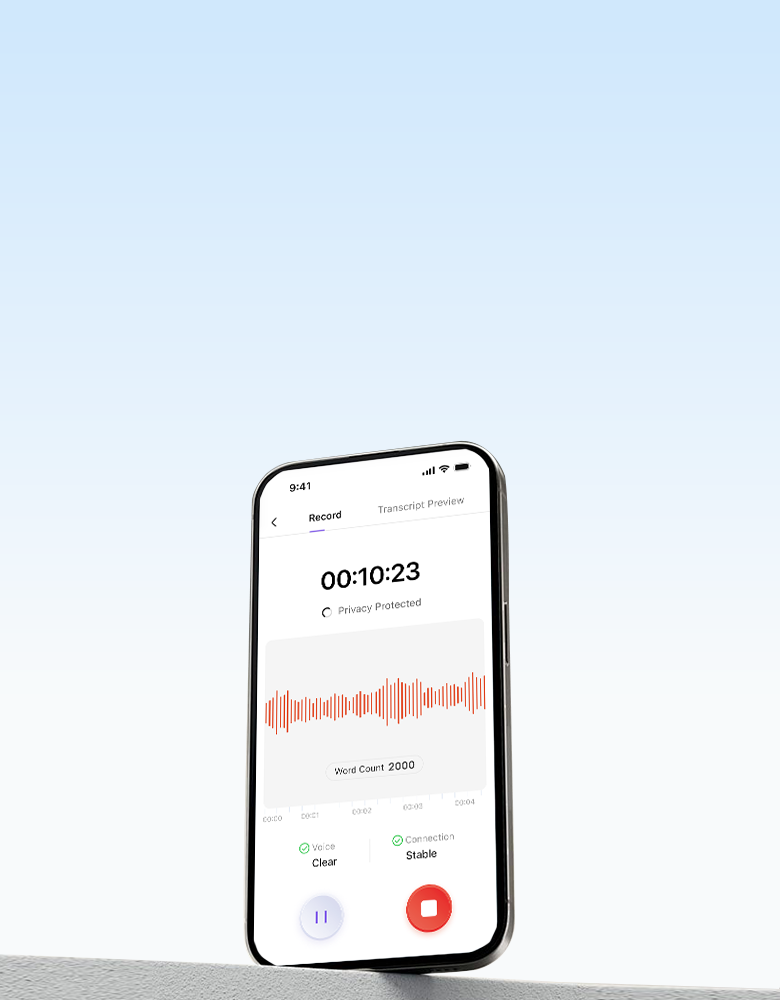
Record a meeting on your phone or import an audio file.
CoHear records or imports meeting audio, transcribes it into notes, insights, and next steps.
Show the process from transcription in progress to completed output, with industry context applied to the result.
Placeholder: show the process from transcription in progress to completed output, with industry context applied to the result.
CoHear is your AI notetaker: transcribe, capture decisions and risks, and turn meetings into work you can build on.
Record the meeting, understand the work behind it, and move the next step forward.
Record a meeting on your phone or import an audio file.
See the key points, decisions, risks, and actions from a single meeting or topic.
turn notes into reusable material for follow-ups and reports.
From recording or importing audio to analysis and reusable deliverables, CoHear keeps the post-meeting work connected.
Record on your phone or import an audio file. CoHear turns the meeting audio into a viewable, traceable record ready for analysis.
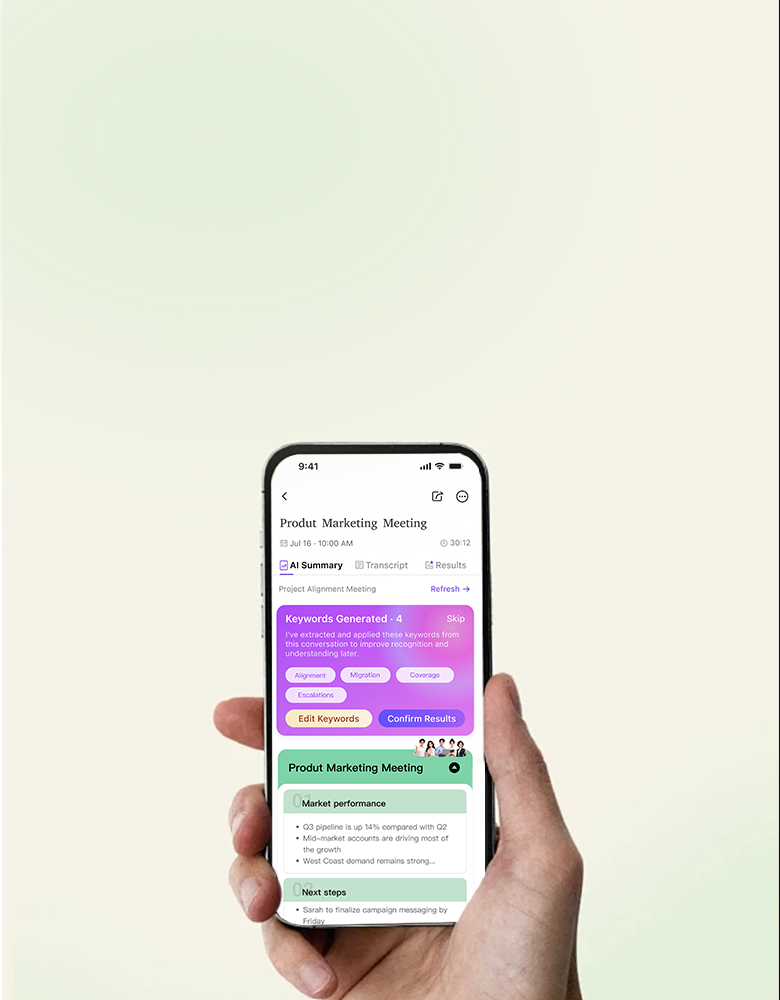
Analyze a single meeting or a topic to find key takeaways, conclusions, risks, and what needs to happen next.
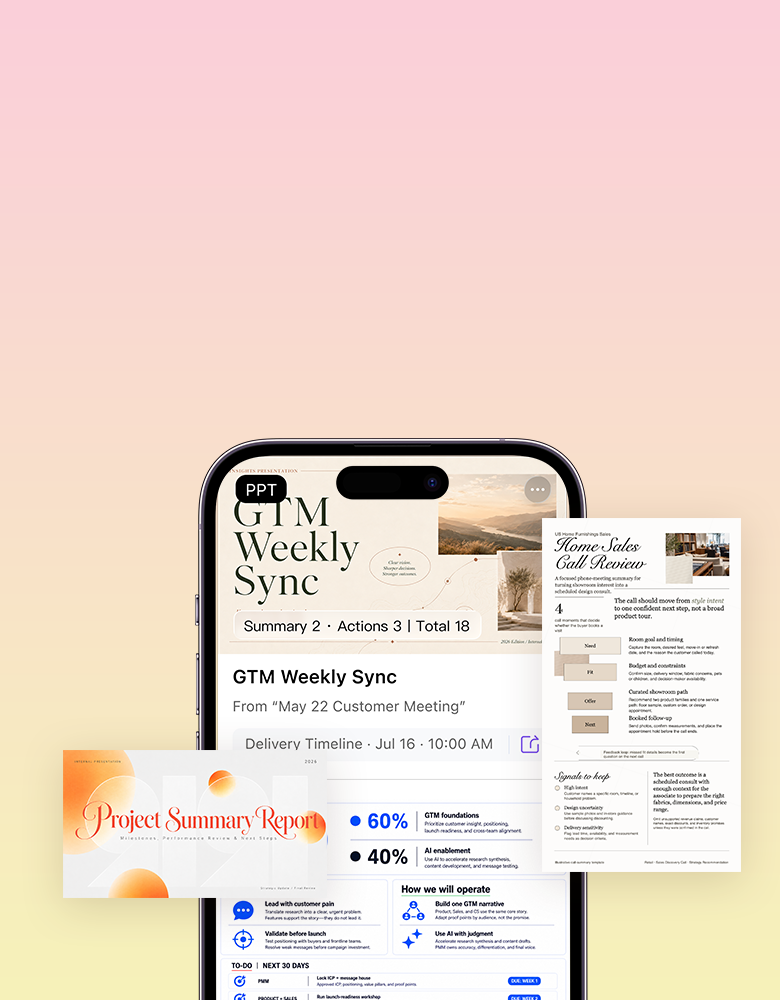
Turn organized information into reports, infographics, PPTs, and other reusable materials for follow-up and reporting.
As meetings build up, CoHear links them into one workstream — progress, decisions, risks, open questions.
Every recording or imported audio file becomes a clear meeting record with key points, decisions, risks, and actions.
When meetings keep returning to the same work, CoHear groups them into one topic — clarifying the workstream, progress, risks, and open questions.
CoHear adapts analysis and deliverables to your industry, role, and work context — with templates for analysis, slides, and infographics.
Every control stays visible — recording notice, sharing controls, deletion, export, and AI data choices — before and after you record.
Every new recording, transcript, summary, and generated result starts private to your account. You choose when to share it.
Recording status stays visible before and during capture. Before recording, inform everyone and obtain any consent required by local law.
Choose the audience and the exact content to share: audio, transcript, summary, or artifact. A shared link can expire, and you can revoke access later.
Delete an individual recording and its transcripts, summaries, generated results, and related indexes. Account deletion removes the account and its associated content through the product flow.
Request an export of the content associated with your account, subject to identity verification and the product's supported formats.
Your content is used to deliver CoHear services by default. Model training is off unless you give separate, explicit authorization.
CoHear may use service categories such as speech recognition, language-model processing, secure storage, and analytics. Current providers should be named before launch.
A product chain that connects acquisition and sensing, deep contextual adaptation, and output execution.
Turn captured speech into a stable, traceable input signal.
Place the transcript in context to form executable understanding.
Push understanding into action, artifacts, and a closed loop.
Perspectives from 20 work roles on how CoHear can keep work moving.
I can go from a recording to a clear summary and action list without rebuilding the meeting from scratch.

The analysis helps me see what changed, what is still open, and what needs a follow-up.
A meeting result becomes something I can share with the team and use in the next meeting.
The summary separates decisions from open questions, so I know what to resolve next.
I can carry key user evidence from interviews into the next design review.
The action list makes ownership and follow-up visible before the next customer call.
I spend less time replaying a recording and more time aligning the team.
Risks and dependencies are easier to spot when the meeting is organized.
Topic analysis shows how findings repeat across interviews instead of leaving them as isolated notes.
A clear meeting record helps me explain why a timeline changed.
Original articles from CoHear on meetings, decisions, privacy, and the work that continues after people talk.
Browse the latest articlesFEATURED ARTICLE · MEETINGS & DECISIONS
Meeting notes become useful only when decisions, owners, and unresolved questions remain visible after the conversation ends.
0 likes · 0 comments
ARTICLE · WORKFLOWS
What still has to happen after a summary before a team can actually move?
0 likes · 0 comments
ARTICLE · RESPONSIBLE AI
Where helpful interpretation ends and unsupported invention begins.
0 likes · 0 comments
GUIDE · AI WORK
A practical guide to turning meeting context into decisions and next steps.
0 likes · 0 comments
Start with the free plan, then add more recording room or creative output when you need it.
Prices are shown in USD. Plans renew monthly unless cancelled in your Apple Account subscription settings.
CoHear connects context across meetings, shows the evidence behind insights, and turns understanding into a next action or useful artifact.
No. Record when it helps, or import an audio file after a meeting. CoHear supports the meetings and work conversations you choose to keep working with.
Choose whether to share the audio, transcript, summary, or generated artifact.
New recordings and results are private by default. CoHear provides recording notice, sharing controls, and deletion controls for the content you choose to keep.
Scan with your iPhone camera to download CoHear from the App Store.